p_bad <- vplot(arrests, width = 7, height = 4.8) |>
  mark_point(x = assault, y = murder, size = 1.8, color = "#6b4f2c") |>
  mark_text(x = assault, y = murder, label = state, size = 7) |>
labs(title = "Anchored at the point", x = "assaults per 100k", y = "murders per 100k")Labels that get out of each other’s way
Text
repel = TRUE hands label placement to the engine solver, which works in device pixels, so facets, polar coordinates, and warped panels all repel correctly, in one pass with no second compile.
Fifty state names on one scatter, anchored at their points, produce a pile of overlapping text. datasets::USArrests, murder rate against assault rate:
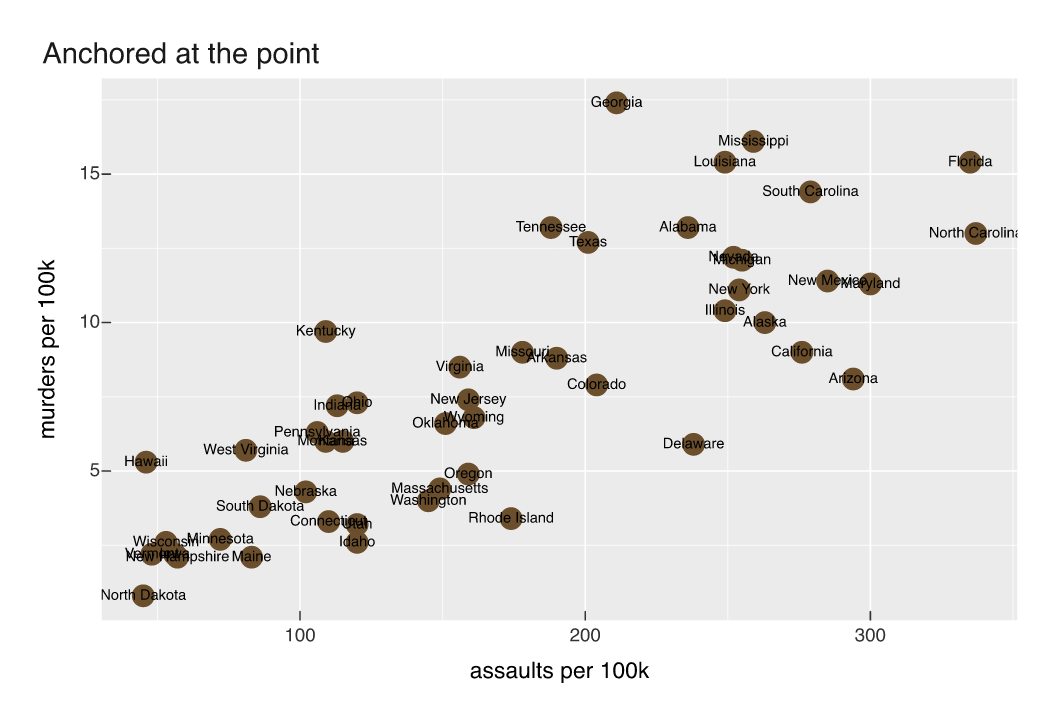
Add repel = TRUE and the labels move apart:
p_good <- vplot(arrests, width = 7, height = 4.8) |>
  mark_point(x = assault, y = murder, size = 1.8, color = "#6b4f2c") |>
  mark_text(x = assault, y = murder, label = state, size = 7, repel = TRUE) |>
  xlim(20, 380) |>
  labs(title = "Repelled", x = "assaults per 100k", y = "murders per 100k")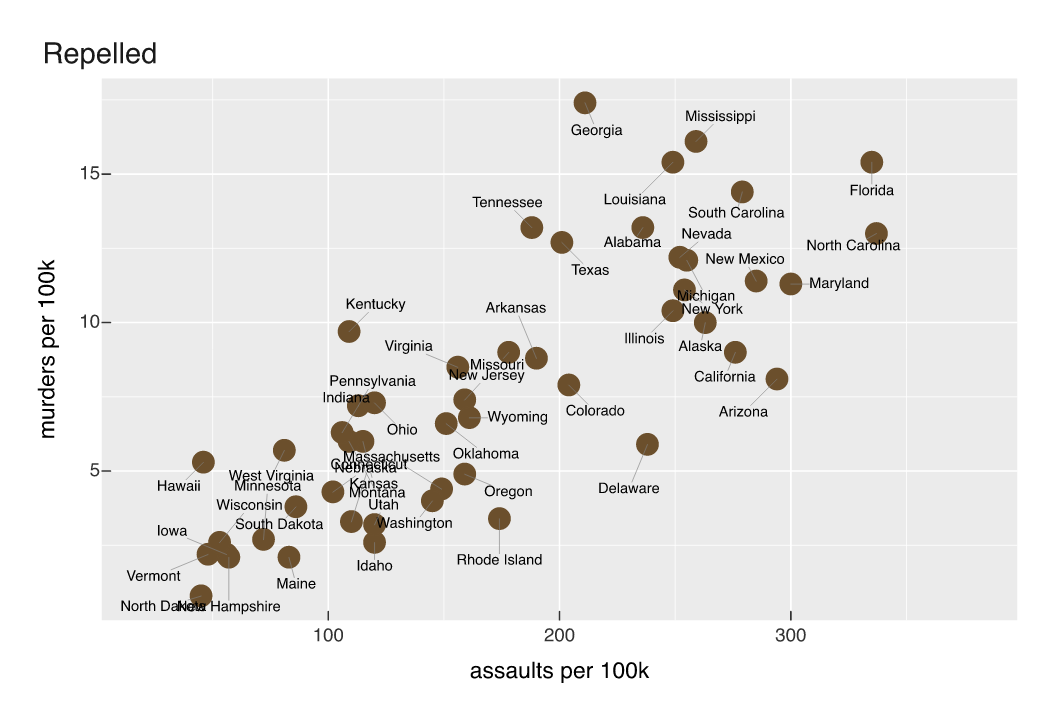
Where it happens matters
The placement is solved by the engine (vellum::vl_repel()) rather than by the grammar, and it is solved in device pixels, the space the glyphs actually occupy, then applied back as an absolute millimetre offset. Two consequences follow.
The first is that it is one pass. The plot compiles, the solver reads the boxes it produced, and the answer is applied; there is no second compile and no iteration between the grammar and the renderer. The solver is deterministic, so the same plot gives the same placement every time (the old seed argument is kept but inert).
The second is that it is coordinate-agnostic. Because it never touches the data scales, it does not care what shape the panel is or how the coordinate system warps. A faceted plot is solved per panel, with each panel’s labels kept inside it:
p_facet <- vplot(arrests, width = 7.5, height = 5) |>
  mark_point(x = assault, y = murder, size = 1.6, color = "#6b4f2c") |>
  mark_text(x = assault, y = murder, label = state, size = 6, repel = TRUE) |>
  facet_wrap(~region) |>
  xlim(0, 400) |>
  labs(title = "Solved per panel", x = "assaults per 100k", y = "murders per 100k")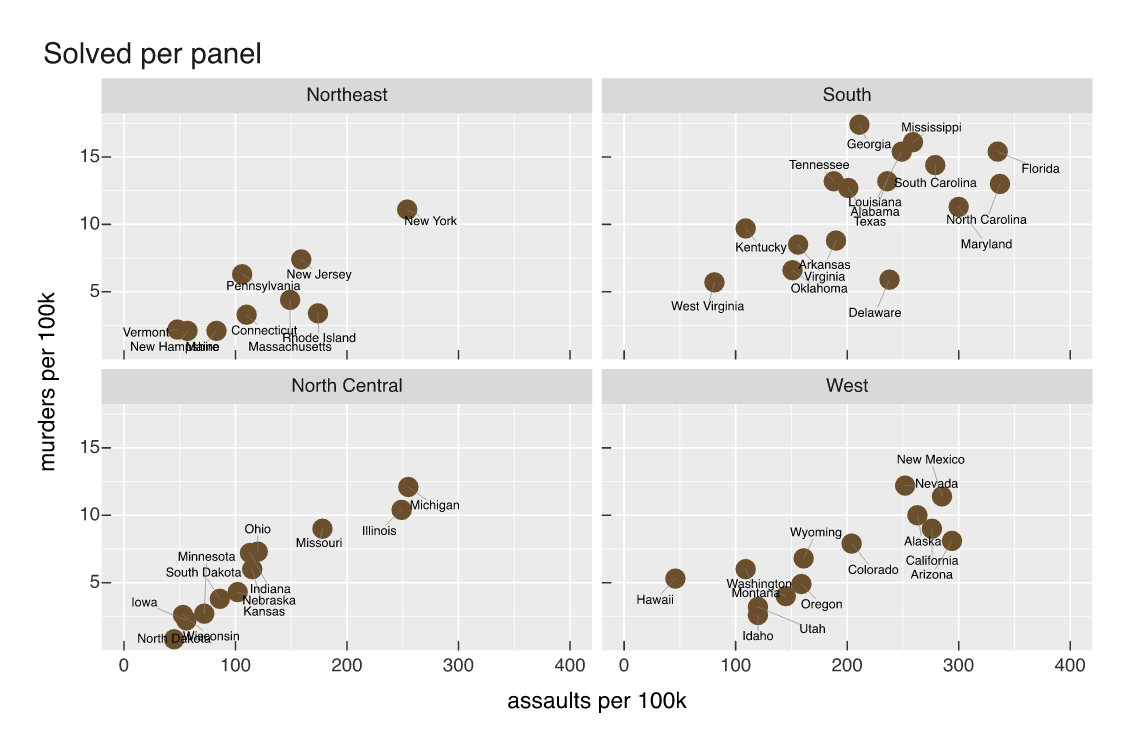
A polar panel repels too, which used to be a hard error. Placement in a warped coordinate system is the case a solver working in data coordinates cannot handle, and the case a solver working in device pixels never notices:
top <- arrests[order(-arrests$assault), ][1:14, ]
top$state <- factor(top$state, levels = top$state)

p_polar <- vplot(top, width = 6.5, height = 5.4) |>
  mark_bar(x = state, y = assault, fill = "#c9a874") |>
  mark_text(x = state, y = assault, label = state, size = 7, repel = TRUE) |>
  coord_polar() |>
  labs(title = "Repelled in polar coordinates", x = NULL, y = NULL) |>
  theme(axis.text.x = element_blank())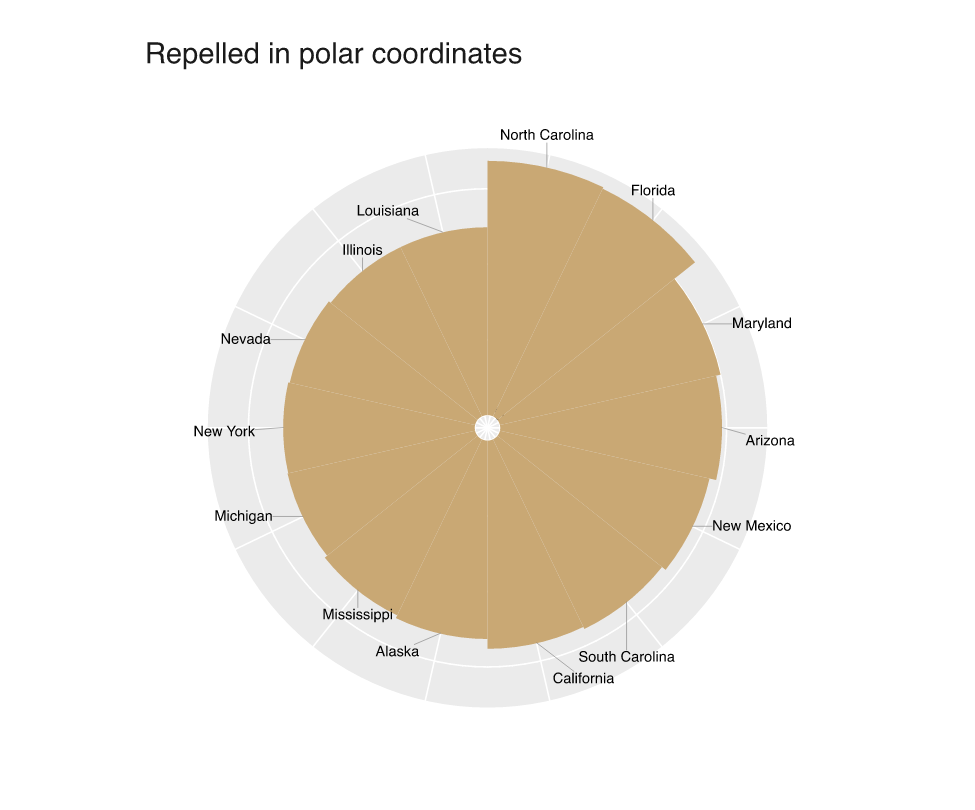
The leader lines come from the same solve that placed the labels, so they point where the label actually went. That matters more than it sounds. If you draw leaders yourself from a separate vellum::vl_place() call, place first and annotate afterwards: anything already in the scene is an obstacle to a later solve, and a leader lying along the route a label wanted to take will push that label straight back where it came from.